95/5 Tin-Antimony Solder is a soft solder by Genérico importado, classification ASTM B32 Sb5, lead-free tin-antimony alloy. In stock; diameter, package and price are confirmed in the quote.
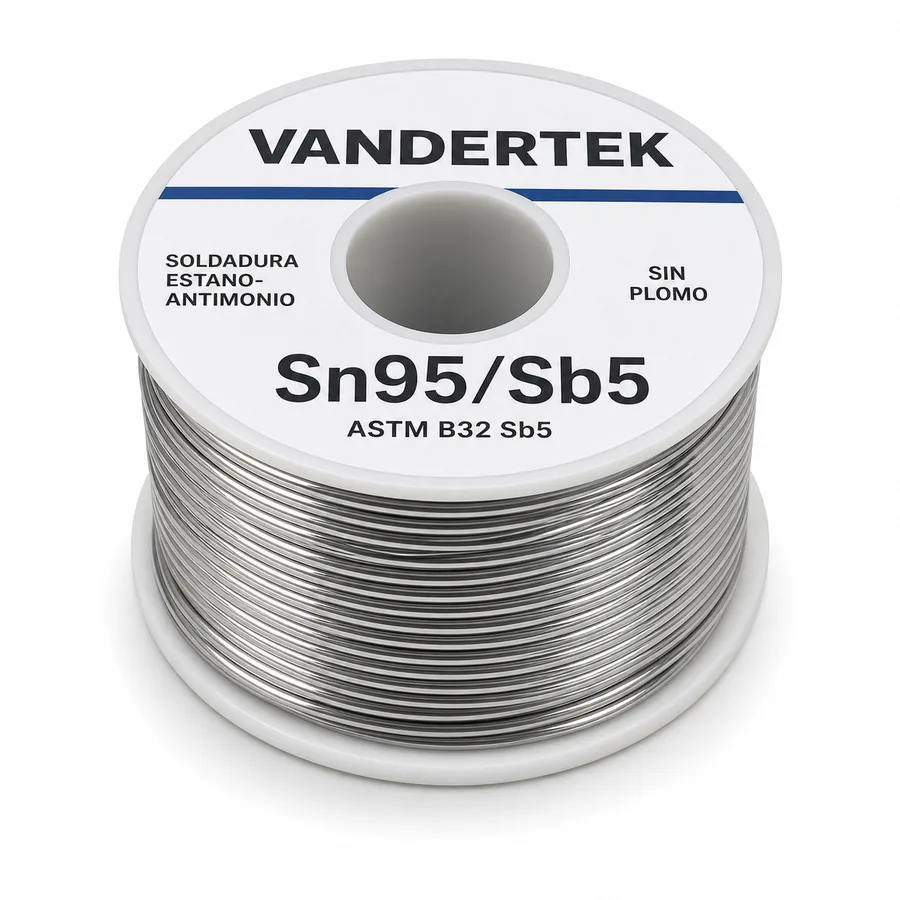
In stock — state diameter, package and quantity when requesting a quote and an advisor confirms the price.
| Standard | ASTM B32 Sb5 |
| Process | Soldadura blanda |
| Model | Sn95/Sb5 |
| Brand | Genérico importado |
| Base material | estaño-antimonio sin plomo |
| Type | Pure tin |
95/5 tin-antimony solder is a lead-free alloy identified as ASTM B32 Sb5, used in soft soldering when higher mechanical strength than common tin-lead alloys is required and compatibility is needed with copper, refrigeration, heating and technical networks. Antimony modifies tin behavior to obtain a firmer joint, so this reference is often specified in installations where lead is not desired and industrial performance is required. It differs from 95/5 tin-silver because it does not contain silver, and from 99/1 tin-copper because its main alloying element is antimony. It must not be confused with brazing solders; the procedure, flux and working temperature correspond to soft soldering.
| Technical data | Reference value |
|---|---|
| Classification | ASTM B32 grade Sb5 · J-STD-006 |
| Composition | Antimony (Sb) 4.5–5.5 % · tin (Sn) balance |
| Solidus | 232 °C (450 °F) |
| Liquidus | 240 °C (464 °F) |
| Density | 7.26 g/cm³ |
| Tensile strength | 40.7 MPa (5,900 psi) typical of the alloy |
| Shear strength | 42.7 MPa (6,200 psi) typical |
| Electrical conductivity | 11.9 % IACS at 20 °C |
The values in this table are nominal reference data. Before using them in engineering decisions, review the technical notice at the end of this page and your project's welding procedure specification (WPS).
SoldaForce handles orders for 95/5 tin-antimony solder for industrial maintenance and technical installation. We dispatch to Bogotá, Medellín, Cali, Barranquilla and all of Colombia. Request a quote via WhatsApp with quantity, packaging and application.
The price is defined by packaging, quantity and availability. SoldaForce confirms the quote via WhatsApp.
Both are lead-free, but they use different alloying elements: antimony in Sb5 and silver in tin-silver. The choice depends on the project specification.
Fit and clean tube and fitting, apply compatible flux, heat the joint and let the solder flow by capillary action.
Yes. The product is identified as ASTM B32 Sb5.
Yes. The lot describes it as lead-free tin-antimony.
It is usually not the first option for fine electronics. For that use, specific alloys and packaging for electrical assembly are reviewed.
Updated: July 9, 2026